Skip to content

Research / Funded grants

2021 Young Investigator

Enhancing Suicide Risk Assessment and Prevention Among Diverse Adolescents Using Virtual Human Interaction

2 research findings from this AFSP-funded study.

Research finding · March 2026

A new assessment could help clinicians improve short-term suicide risk detection

A persistent challenge in suicide prevention is that many individuals who attempt or die by suicide deny suicidal thoughts when asked directly. Suicidal intent can shift quickly, sometimes intensifying in the hours or days before an attempt. These realities make it difficult for clinicians to rely on self-reporting alone when assessing short-term risk. The Suicide Crisis Syndrome (SCS) has been proposed by Dr. Igor Galynker as a suicide-specific mental state marked by a powerful sense of entrapment, emotional pain, cognitive overwhelm, hyperarousal, and social withdrawal. Prior research has shown that this pattern of symptoms can signal heightened near-term risk, but most assessments have relied on patient questionnaires. To support everyday clinical practice, there is a need for a structured, clinician-rated interview tool that could help identify this crisis state, even when patients do not openly disclose suicidal thoughts.

With her AFSP-funded research grant, Dr. Sarah Bloch-Elkouby along with Dr. Galynker developed and tested the Suicide Crisis Syndrome Checklist (SCS-C), a brief, 15-item interview tool administered to 219 adults admitted to psychiatric inpatient units. The checklist allows clinicians to assess core features of the suicide crisis state through targeted questions during routine evaluation. The measure showed strong reliability, meaning clinicians tended to agree in their ratings and the items worked together consistently. Patients who met criteria for the Suicide Crisis Syndrome were significantly more likely to have also engaged in suicidal behaviors in the week prior to the assessment, supporting the tool’s clinical relevance. Notably, the SCS-C was linked more closely to suicidal behaviors than to the severity of suicidal thoughts as measured by the Columbia-Suicide Severity Rating Scale (C-SSRS). This reinforces that imminent risk is not always captured by suicidal ideation alone. While further research is needed to determine how well the tool predicts future outcomes, these findings suggest that structured clinician-guided assessment of the suicide crisis state may strengthen short-term risk detection and support more informed intervention.

Citation: Bloch-Elkouby, S., El-Hayek, R., Cohen, L., Chen, J. P., Gorman, B., Apter, Y., Wheeler, E., Park, B., Prekas, A. S., & Galynker, I. (2026). The clinician rated suicide crisis syndrome checklist (SCS-C): Structure, reliability, and concurrent validity among adult psychiatric inpatients. Journal of affective disorders, 402, 121341. Advance online publication. https://doi.org/10.1016/j.jad.2026.121341

This finding comes from an AFSP-funded study — see the grant below ↓
Research finding · July 2023

Self-disclosure of suicidal ideation or intent may vary, based on who is asking

The effective assessment of suicide risk depends on a range of variables. One crucial factor in this equation is whether patients are willing to disclose suicidal ideation or intent. Despite clinician’s reliance on self-disclosure, this practice has been called into question due to an accumulation of research suggesting a potential tendency for adults and adolescents to conceal their ideation or intent before engaging in suicidal behavior.

Dr. Sarah Bloch-Elkouby and her team set out to understand more about the characteristics and contexts that could lead psychiatric outpatients to not disclose suicidal thoughts and intent. To do this, 780 psychiatric outpatient participants were assessed for recent and current suicidal ideation and behavior by both clinicians and research assistants in the context of a research study. Results indicated that roughly twice as many participants disclosed suicide ideation or intent to research assistants instead of clinicians, with less than 20% disclosing to both. It’s not clear what leads to these discrepancies, and more research is needed on factors that may influence disclosure, such as concerns about revealing suicidal ideation, help-seeking, and therapeutic relationship (i.e., comfort with the interviewer). These findings also highlight the importance of not relying exclusively on self-report when assessing risk for suicide.

Citation: Bloch-Elkouby, S., Zilcha-Mano, S., Rogers, M. L., Park, J. Y., Manlongat, K., Krumerman, M., & Galynker, I. (2023). Who are the patients who deny suicidal intent? Exploring patients’ characteristics associated with self-disclosure and denial of suicidal intent. Acta Psychiatrica Scandinavica, 147(2), 205-216, http://dx.doi.org/10.1111/acps.13511

This finding comes from an AFSP-funded study — see the grant below ↓

The grant behind this work · 2021 Young Investigator

Enhancing Suicide Risk Assessment and Prevention Among Diverse Adolescents Using Virtual Human Interaction

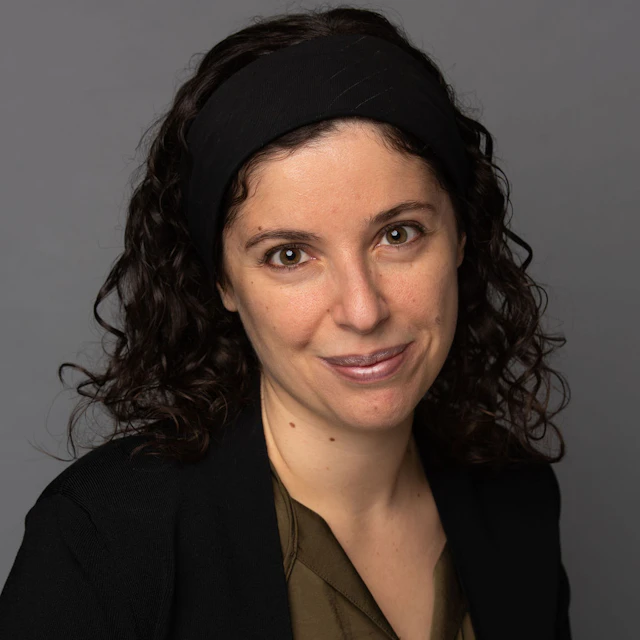
Sarah Bloch-Elkouby, Ph.D.

Sarah Bloch-Elkouby, Ph.D.

Icahn School of Medicine at Mount Sinai

Mentor: Igor Galynker, M.D.

Amount awarded
$90,000
Focus area
Psychosocial

Inside the Research

Over the last couple of years, the rates of child and adolescent suicide continue to rise, especially among ethnic, racial, and sexual minorities. The study will assess the effectiveness of a novel clinician training tool, the Virtual Human Interaction (VHI), to enhance clinical training in the assessment of imminent suicidal risk among diverse adolescent populations.

More funded research

See all grants →

2026 Early Career Researcher Grant

Analyzing the Impact of Companion Dogs as a Protective Factor for Prevention of Suicidality in Veterans

Leanne Nieforth, Ph.D. · $140,000

2026 Early Career Researcher Grant

Future-Oriented Mental Imagery and Adolescent Suicide Risk

Ki Eun Shin, Ph.D. · $140,000