Research / Funded grants
2023 Standard Research Grant
SAFETY-Parent: Online Learning Module to Support Parents of Suicidal Youth
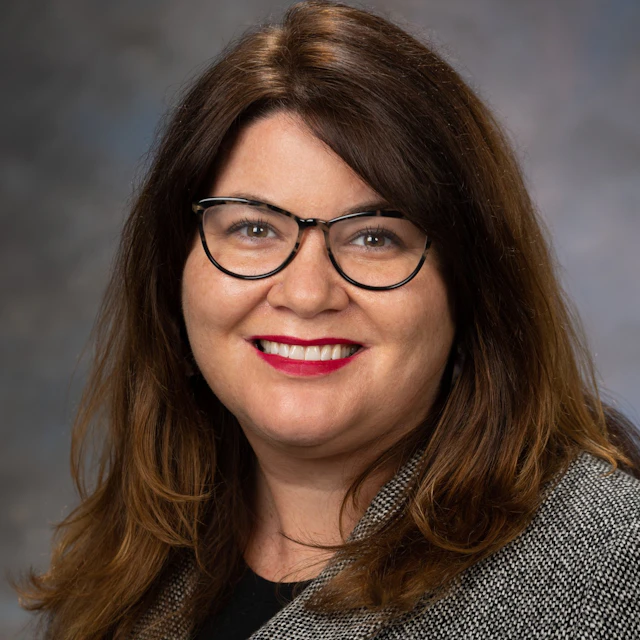
Jennifer L. Hughes, Ph.D., MPH
Nationwide Children’s Hospital, The Ohio State University
$125,000 Focus area
Clinical Treatment Awarded
2023
Inside the Research
When a child or teen is having suicidal thoughts or behaviors, parents are key in recognizing the signs, monitoring and supporting their child, and seeking care for their child. This study will develop and test an online self-paced intervention module, called SAFETY-Parent, for parents to learn strategies to best support their child when the child is receiving treatment for suicidal ideation, suicidal behavior, or recent suicide attempts.
Full scientific abstract
Youth suicide is a major public health problem, and suicide is the 3rd leading cause of death among 10-24-year-olds in the United States. Parents (parents refers to all primary caregivers) have a significant role in youth suicide prevention, and studies have demonstrated the importance of families in youth suicide interventions. Supporting parents to manage safety while maintaining strong relationships with their children is critical in suicide prevention efforts and may lead to reduction suicidal behavior and death by suicide. Online platforms may also be used to supplement individual psychosocial intervention, via additional skills learning and practice opportunities. Online programs and applications are now a familiar and preferred way for parents to receive information and support. Additionally, online interventions are easily scalable for broad dissemination and can be used to augment and complement face-to-face services. This proposal aims to adapt the parent component of Safe Alternatives for Teens and Youths (SAFETY) outpatient intervention to SAFETY-Parent (SAFETY-P), a self-paced interactive learning module for parents, to be implemented as an augmentation to individual treatment for youth being seen for suicidal ideation, suicidal behavior, or recent suicide attempts in a brief crisis care outpatient clinic at a large children’s hospital. Phase 1 will focus on finalizing the SAFETY-P content to the online learning module. In Phase 1, the research team will conduct 4 separate stakeholder focus groups (adolescents, parents, behavioral health inpatient and outpatient providers, and parent survivors of suicide loss) to inform adaptations to SAFETY-P and development of the self-paced, interactive module to be used in Phase 2. Phase 2 will be a small open case series (10 families and 5 clinicians) integrating additional key stakeholder feedback to improve the usability of SAFETY-P. Phase 3 will include a pilot test of the revised SAFETY-P learning module. To assess the feasibility and acceptability of the SAFETY-P module, the research team will conduct a pilot randomized controlled trial with N = 30 youth and parents, who will be randomized to either the SAFETY-P + treatment as usual (TAU) or to TAU alone. Outcomes will include feasibility and acceptability, including satisfaction measures related to SAFETY-P content and to the online learning module usability, clinician-report of SAFETY-P use and effectiveness, services use and youth individual treatment, parent outcomes on family and parent variables, and youth outcomes on youth suicidal risk and family variables.
This study is underway
Findings will be published here as the research progresses. to hear when they’re available.
More funded research
See all grants →2026 Early Career Researcher Grant
Analyzing the Impact of Companion Dogs as a Protective Factor for Prevention of Suicidality in Veterans
Leanne Nieforth, Ph.D. · $140,000
2026 Early Career Researcher Grant
Future-Oriented Mental Imagery and Adolescent Suicide Risk
Ki Eun Shin, Ph.D. · $140,000