Research Roundup October 2026: Recently Published Findings From AFSP-Funded Studies
October 1, 2026 – 7 min read
By AFSP

The Research Roundup is a regular update of recently published findings in suicide prevention research. AFSP-funded studies included in this roundup examined how…
- Screening plus skills-building may improve nurse wellbeing and reduce burnout and suicidal ideation
- Digital mental health engagement may expand suicide prevention on college campuses
- Technology-related pressure and loss of control may overlap with acute suicide crisis symptoms, and
- Genetic risk for suicidal behavior may be reflected in brain regions involved in impulse control

Researcher: Bernadette Mazurek Melnyk, PhD
Institution: The Ohio State University
Grant Type: 2022 Focus Grant — $1,498,914
Grant Title: HEAR Plus MINDBODYSTRONG: A Mental Health Resiliency Intervention for Nurses
Burnout and mental health challenges among nurses can affect not only their own wellbeing, but also workforce retention, patient safety, and the quality of care they provide. Nurses experiencing distress may also hesitate to seek help because of stigma, confidentiality concerns, or fears about professional consequences. Confidential mental health screening can help identify people who may need care and connect them with resources, but identification is only the first step; screening must be paired with follow-up action to address distress and build skills for managing it over time. Researchers are therefore examining whether combining psychologically safe screening and referral with accessible, evidence-based interventions can improve nurses’ mental health, wellbeing, and suicide-related outcomes.
With her AFSP-funded grant, Dr. Bernadette Mazurek Melnyk and colleagues adapted MINDBODYSTRONG, a cognitive behavioral skills-building program developed by Dr. Melnyk, into an online video-based intervention. They then conducted the first randomized controlled trial to test whether adding a digital skills-building intervention to confidential screening and referral could improve outcomes for nurses experiencing mental distress. The study enrolled 501 nurses across the United States, who received either AFSP’s Interactive Screening Program (ISP) with referral or ISP combined with MINDBODYSTRONG, which teaches practical skills for managing thoughts, emotions, stress, sleep, problem-solving, and wellbeing.
Compared with screening and referral alone, nurses offered MINDBODYSTRONG showed greater improvements in anxiety, depression, and healthy lifestyle beliefs and behaviors over three and six months, as well as a significantly lower risk of burnout at six months. Suicidal ideation declined in both groups, but the decrease was particularly notable among nurses receiving MINDBODYSTRONG, falling from 13.7% at baseline to 2.8% at six months—an approximately 80% reduction—compared with a decline from 16.3% to 8.3% among those receiving screening and referral alone. The difference between groups, however, did not reach statistical significance. The findings suggest that pairing psychologically safe screening and referral with scalable skills-building can provide additional benefits for nurses experiencing mental distress, while both groups showed substantial reductions in suicidal ideation.
Citation: Melnyk, B. M., J. E. Davidson, S. Tucker, et al. 2026. “Effects of Digital Mental Health Screening Alone and With the Online MINDBODYSTRONG CBT-Based Program on Burnout, Depression, Anxiety, Healthy Behaviors, and Suicidal Ideation in at-Risk Nurses at 3- and 6-Months Post-Intervention: An RCT.” Worldviews on Evidence-Based Nursing 23, no. 5: e70171. https://doi.org/10.1111/wvn.70171
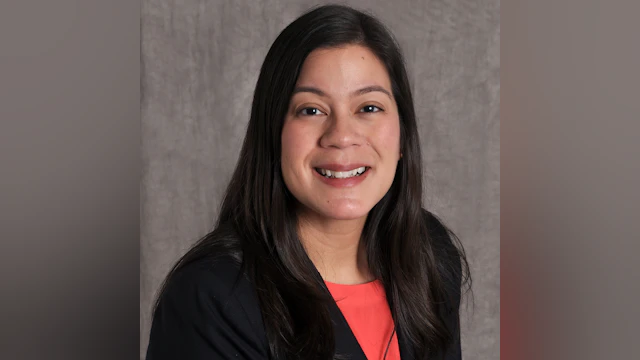
Researcher: Jazmin Reyes-Portillo, PhD
Institution: Montclair State University
Grant Type: 2020 Pilot Research Grant – $30,000
Grant Title: Increasing Engagement of College Students At-Risk for Suicide in Online Intervention
College students experiencing depression, anxiety, or suicidal thoughts often face barriers to getting help, at times due to campus counseling centers struggling to meet growing demand. Digital mental health interventions could help expand access by offering interventions that are private, flexible, and available outside traditional therapy settings. These tools only help if students actually use them, and uptake and follow-through have often been low. Barriers can include stigma and negative attitudes about getting help, limited time, uncertainty about needing treatment, concerns about privacy, or simply not knowing whether an online program will be useful. Researchers are therefore examining whether digital mental health interventions can reduce distress, and how to make them easier for students with risk for suicide to start and continue using.
Dr. Jazmin Reyes-Portillo and colleagues used AFSP funding to develop Supporting Technology Engagement for Prevention (STEP), an intervention specifically designed to help college students with risk for suicide engage with digital mental health care. STEP was built using focus-group input from students and targeted the barriers they said mattered most, combining personalized feedback about symptoms and providing information about the value of online treatment, peer testimonials, an individualized intervention plan, brief human coaching, and motivational text reminders. In this initial open trial, 30 ethnoracially diverse college students, ages 18 to 29 with elevated levels of depression or anxiety and active suicidal ideation, received STEP alongside Therapist Assisted Online, an evidence-based digital intervention. Engagement was notably high: 93% completed at least one treatment session, 63% completed at least half of the program, and half completed 80% or more. Most students also reported being satisfied with the experience.
Over seven weeks, participants showed significant reductions in depression, anxiety, and suicidal ideation, with the reduction in suicidal ideation emerging later in the intervention period. Because this was a small, uncontrolled pilot study, the findings cannot establish that STEP caused these improvements, but they suggest that designing digital care applying students’ own barriers and preferences may be a promising way to improve both access to and sustained engagement with suicide prevention support.
Citation: Reyes-Portillo, J. A., So, A., Judd, E., Lekas, H.-M., King, C., Uy, J., Karr, C., & Masia Warner, C. (2026). Supporting technology engagement for suicide prevention: An open trial with college students at-risk for suicide. Archives of Suicide Research. Advance online publication. https://doi.org/10.1080/13811118.2026.2713052

Technology is now embedded in nearly every part of daily life, often in ways that are difficult to avoid. People may depend on apps, automated systems, constant connectivity, digital identification, online services, and social platforms for work, communication, shopping, healthcare, and basic tasks. For some, this can create a sense of being watched, pressured, manipulated, or unable to disengage; yet there has been no established way to measure that experience or understand whether this form of technology-related distress is associated with acute psychological distress or suicide vulnerability. One framework researchers use to understand near-term suicide risk is Suicide Crisis Syndrome (SCS), a proposed acute suicidal state characterized by entrapment, affective disturbance, loss of cognitive control, hyperarousal, and social withdrawal. Researchers therefore set out to examine whether perceived loss of autonomy in digital environments could be measured reliably, and whether it overlaps with these symptoms of acute suicide vulnerability.
With AFSP funding, Dr. Igor Galynker and colleagues developed the 22-item Digital Coercion Scale to measure perceived pressure, loss of control, and distress related to technology, and tested it in 89 adults receiving inpatient psychiatric care across four New York City hospitals; 31 had been hospitalized following a suicide attempt within the previous week. The scale showed strong internal consistency and captured five distinct dimensions of digital distress: emotional distress related to digital engagement, frustration with technological systems, privacy and surveillance concerns, forced dependence on technology, and compulsory social connectivity. Higher scores were significantly associated with depression and with the overall SCS measure, as well as each of its five symptom domains.
The strongest associations were with affective disturbance and entrapment, while social withdrawal also emerged as a consistent correlate in multivariable analyses. By contrast, digital coercion scores were not significantly associated with suicidal ideation itself. Among a smaller subgroup hospitalized after a recent suicide attempt, participants who reported unusually dark, hopeless, or otherwise atypical social media activity also had higher digital coercion scores. These findings do not establish that technology-related distress causes suicidal crises or predicts suicidal behavior, but they provide preliminary evidence that perceived digital coercion is a measurable form of distress that overlaps with acute suicide crisis symptoms and may capture aspects of vulnerability not reflected by suicidal ideation alone.
Citation: Wheeler, E., Cohen, L. J., Sobrero, M., Bloch-Elkouby, S., Lin, N., El Hayek, R., Apter Levy, Y., & Galynker, I. (2026). The development of the digital coercion scale (DCS) and its association with suicide crisis syndrome (SCS). Journal of psychiatric research, 202, 60–68. https://doi.org/10.1016/j.jpsychires.2026.08.007

Researchers: Hilary Blumberg, MD
Institution: Yale University
Grant Type: 2011 Standard Research Grant — $75,000
Grant Title: The Neural Circuitry of Suicidality in Adolescent Depression
People with bipolar disorder face substantially elevated risk for suicidal behavior, but clinicians still have limited tools for identifying who is most vulnerable. Research has repeatedly pointed to the ventral prefrontal cortex, a brain region involved in emotion regulation, impulse control, and decision-making, as one area that may differ in people with a history of suicide attempts. At the same time, advances in genetics now allow researchers to calculate polygenic risk scores, which combine information across many genetic variants to estimate inherited vulnerability to complex traits such as suicidal behavior. Bringing these approaches together may help researchers understand not only who is at risk, but also how genetic vulnerability may be expressed in the brain.
With AFSP funding, Dr. Hilary Blumberg and colleagues studied 376 people, including 225 with bipolar disorder and 151 healthy comparison participants, to ask whether a higher inherited genetic risk for suicidal behavior was also reflected in the structure of the brain. Each participant received a polygenic risk score, which summarizes the combined effect of many genetic differences linked to suicidal behavior, and underwent MRI scanning. The researchers focused on the right inferior frontal gyrus, a brain region that helps with impulse control and regulating behavior.
Among people with bipolar disorder, higher genetic risk was associated with a smaller surface area in this region. The finding was especially striking among participants with bipolar disorder who had never attempted suicide: those with higher genetic risk had brain measurements that looked more like the measurements seen in participants who had made a previous attempt. At the same time, the genetic score itself did not clearly distinguish who had and had not attempted suicide, and the study does not show that either genetics or brain structure was associated with suicidal behavior. Instead, the findings suggest that genetic vulnerability may leave detectable signatures in brain systems involved in self-control and could eventually add one piece to a broader picture of suicide risk that also includes clinical and psychological information.
Citation: N. Katz Shroitman, D. F. Levey, B. Pittman, et al., “ Association of Polygenic Risk Score for Suicidal Behavior With Ventral Prefrontal Morphology in Bipolar Disorder,” Bipolar Disorders 28, no. 7 (2026): e70172, https://doi.org/10.1111/bdi.70172
Learn more about the AFSP research grants featured in this monthly roundup, as well as others, here.