Men Talk, Men Heal: Reflecting on the Male Perspective of Grief at the Long-Term Survivors of Suicide Loss Summit
August 3, 2026 – 5 min read
By Victor (Vic) Armstrong, MSW, AFSP Vice President for Health Equity and Engagement , Dan Egan
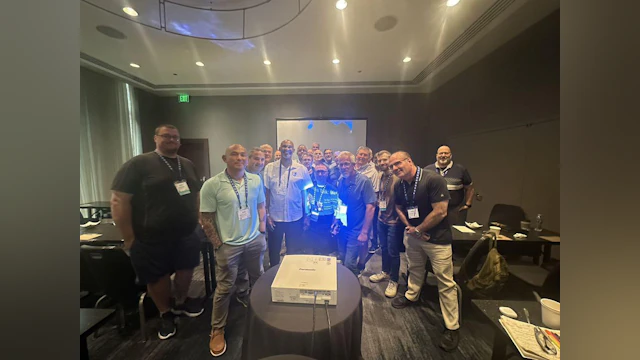
In July 2026, the American Foundation for Suicide Prevention hosted its fourth biennial Long-Term Survivors of Suicide Loss Summit. In attendance were AFSP volunteer Dan Egan, member of AFSP’s national board and chair of AFSP’s Loss & Healing Council; and Vic Armstrong, AFSP’s vice president for health equity and engagement. The one-of-its-kind summit, which included thought-provoking workshops on many aspects of grief following a suicide loss, and healing activities such as an open art studio, sharing circles, a drum circle, a smudging ceremony, and an evening of music by the band the Big Infinite (who have dealt with suicide loss and mental health struggles) and more, featured a session presented by Dan and Vic entitled “Men Talk, Men Heal,” with a special focus on the perspective and experience of male suicide loss survivors.
DAN
I remember attending the first Long-Term Survivor of Suicide Loss Conference in 2016. This was before I was a member of AFSP’s Loss and Healing Council, and I had absolutely no idea what to expect. That first summit inspired me to become more involved in AFSP’s Loss and Healing Programs and led to me joining the Loss and Healing Council.
Fast forward ten years, and you can imagine my excitement at attending this year’s Summit. I was looking forward to the keynote speech by Stacey Freedenthal, about how to cope with self-blame after a suicide loss, and the plenary session on embracing holistic wellness by Amy Grosso. I had already planned which breakout sessions I would attend on Day 1. It was hard to choose given all the options, ranging from sessions on sharing your story, spirituality, and experiential sessions such as Yoga Nidra, and a Sound Bath experience. I opted for “Grief Gave Me This: A Survivor’s Superpower” led by Theresa Howard. She led us through ways to navigate our grief while recognizing the strength and insight that can emerge from loss. I also chose to attend “Tackling Black Suicide through Digital Peer Support & Storytelling,” led by T-Kea Blackman. T-Kea shared her insights on how suicide impacts communities of color and how we can better support them. I thought both sessions I attended were great and I also heard positive feedback on other sessions.
VIC
The Summit was a moving, humbling experience, as it always is when I am in the presence of suicide loss survivors. As someone who is an AFSP staff member but has not personally experienced the suicide loss of a close friend or family member, I felt honored to be in the presence of this event’s attendees, like someone who has been invited into an inner circle. One participant described this gathering of healing and support as “the best club no one wants to be a part of.” The environment brings me to experience empathy on a level that I seldom experience otherwise.
One of the things that anchors me and helps me to settle into my supportive role is knowing I am helping to bring some comfort to those who are healing, including my friend and brother Dan, whom I would be joining for the second time in facilitating a breakout session at this conference.
DAN
Going into Day 2, I was starting to feel some anxiety about the session I would help lead. But knowing I was cofacilitating with my good friend Vic helped ease the stress I felt. This was the second time we have presented this breakout, having done so at the previous summit in 2024 in Austin, Texas. The goal of the session is to create a safe space for other male loss survivors to talk openly about their grief. It’s something Vic and I both approach with great care and intentionality.
VIC
As we began the session, I offered words of encouragement and shared how grateful I was to be in the space; but then I made myself small as I listened and allowed myself simply to feel. One by one, following Dan’s lead, these men of different ages, races, cultures, and communities share their stories of loss and healing. I found myself choking back tears as my heart became full –– not full of grief, but full of hope and strength as these men leant their strength to one another. I was so grateful to be among them.
I always marvel at Dan’s strength as he shares his story of losing his father, all while offering comfort to others. That comfort often comes in the form of one of the huge hugs Dan has become known for. It is the kind of hug that only someone who has known immense pain and immense healing can give. It is a hug that heals.
As I watched the room fill, as one man after another entered and took his seat, I couldn’t help but notice that the air in the room is different when you are in a space with men who are willing to be vulnerable: men who are willing to share both their pain and their strength. To see men weep openly and express the deep sense of loss they have felt, yet with their next breath offer words of encouragement to other men who have experienced loss is both marvelous and heartbreaking. There is no apology for the tears. There is no need. There is no “man code.” There is only shared space, shared grief, shared healing, and shared hope.
DAN
We wanted to make sure everyone had time to share and feel included. I think we were able to accomplish that, and I took a small risk towards the end as I asked everyone to share a favorite memory of the loved one they had lost. I was worried it might be too painful for some, but I also know how meaningful it has been in my journey. I think it went well, and hope that thinking of those favorite and positive memories can help some of the attendees reframe their grief. I used the same technique later in the day while leading a sharing circle with attendees who had lost a parent to suicide. I was so moved when after the session Robert Stohr, a former member of the Loss and Healing Council, came over to thank me and we shared a big hug.

VIC
When our session time ended, I had to leave abruptly as I was scheduled to facilitate another session, entitled, “Who Is a Suicide Loss Survivor? Exploring Grief Beyond Traditional Definitions,” where we would talk with and hear stories from those who had experienced the loss of teachers, classmates, etc. The summit had already proven to be one of the most moving and powerful experiences I have ever been a part of.
And as I was making my exit, I looked back to see Dan offering a hug to one of our brothers, as only he can; a hug that heals.
AFSP offers many programs and resources to support suicide loss survivors. Learn more here.
